Industrial Gas Cylinder Safety: Storage, Handling & Transport
August 18, 2026 · 2 min read
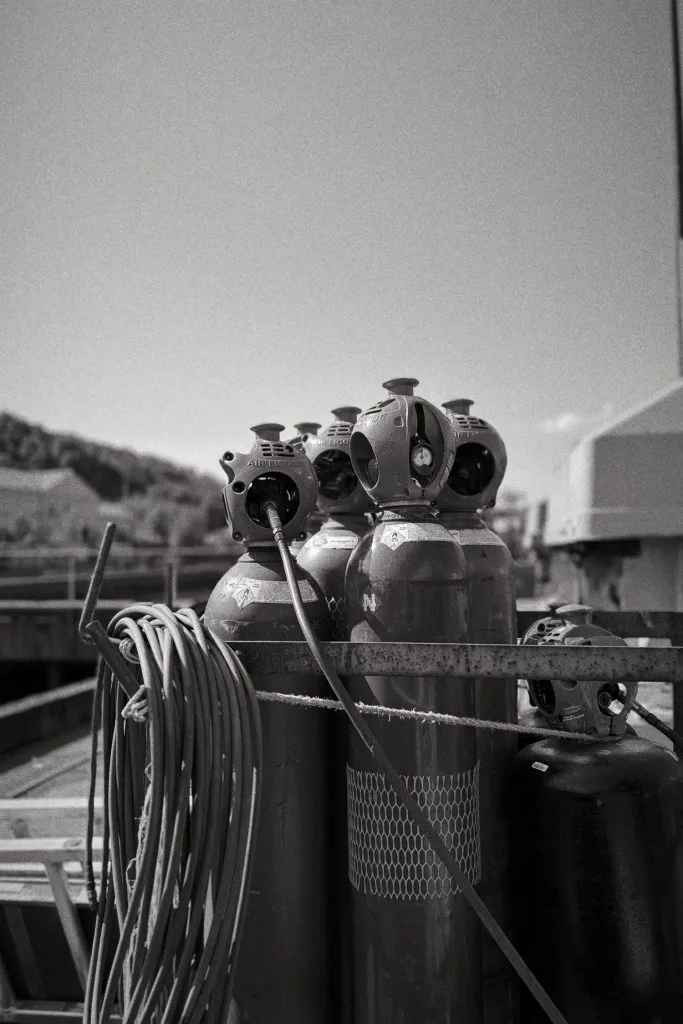
Compressed gas cylinders store energy under high pressure, so safe storage and handling are essential. Following a few simple rules — and PESO (Petroleum and Explosives Safety Organisation) guidelines — keeps your workshop and team safe.
Storage
- Store cylinders upright and secured with a chain or strap so they cannot fall.
- Keep them in a cool, dry, well-ventilated area away from direct heat and sunlight.
- Separate oxygen from fuel gases (like acetylene) by at least 6 metres or a fire-rated partition.
- Keep valve-protection caps on when cylinders are not in use.
- Segregate full and empty cylinders and label them clearly.
Handling & transport
- Never lift a cylinder by its valve or cap — use a trolley and never drag or roll it on its side.
- Close the valve and fit the cap before moving.
- Never use a damaged, corroded or out-of-test cylinder.
- During transport, keep cylinders secured, ventilated and away from the driver’s cabin.
In use
- Use the correct regulator for each gas — never interchange oxygen and fuel-gas regulators.
- Open valves slowly and check for leaks with soapy water, never a flame.
- Do not empty a cylinder completely — leave a small positive pressure to prevent contamination.
Every cylinder we supply is pressure-tested, certified and delivered with proper documentation. Vikas Medical Gases follows strict PESO-compliant filling and handling SOPs. Talk to our team about safe on-site gas storage and supply.
Ready to Get Started?
Contact us today for the best prices on industrial gases, medical oxygen, and fire safety equipment.
Contact Us Now