Argon vs CO₂: Which Shielding Gas Is Right for Your Welding?
August 25, 2026 · 2 min read
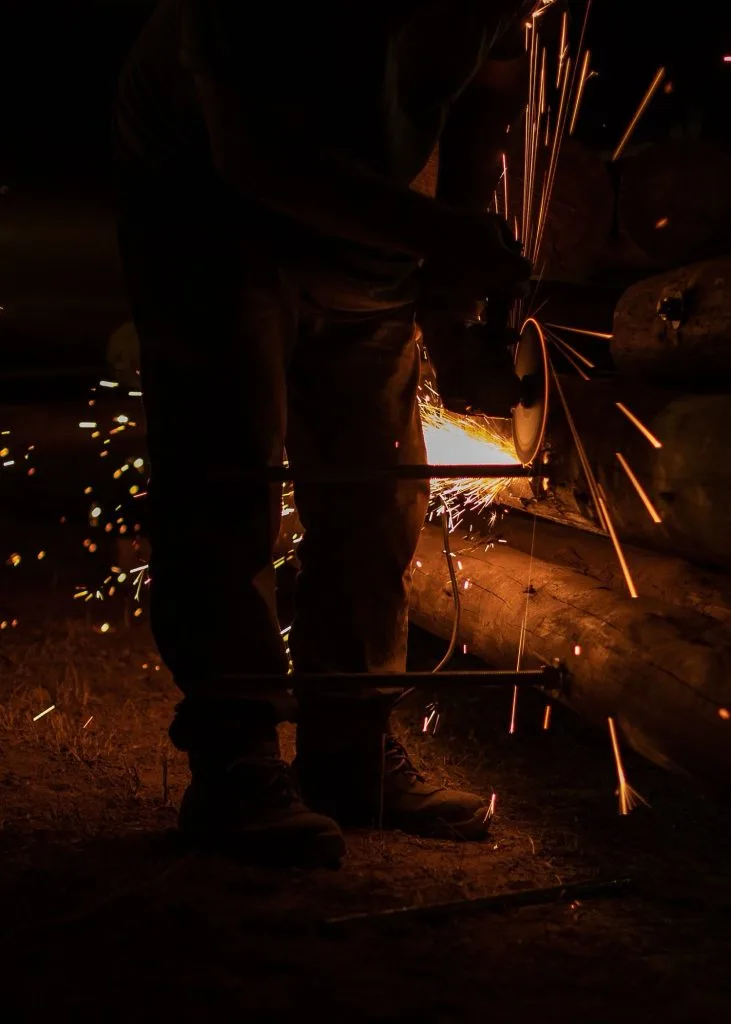
Choosing the right shielding gas is one of the most important decisions in MIG (GMAW) welding. It affects arc stability, penetration, spatter, weld appearance and running cost. For most fabrication shops in India the choice comes down to pure CO₂, pure Argon, or an Argon-CO₂ mixture. Here is how they compare.
Carbon Dioxide (CO₂)
CO₂ is the most economical shielding gas and delivers deep penetration, making it popular for welding thicker carbon steel. The trade-off is a more turbulent arc, higher spatter and a rougher bead. It is a reactive gas, so it is not suitable for aluminium or stainless steel.
Argon (Ar)
Argon is an inert noble gas that produces a smooth, stable arc with minimal spatter and an excellent bead profile. Pure argon is essential for TIG welding and for MIG welding of aluminium, but on carbon steel it gives shallow, narrow penetration — which is why it is rarely used alone on steel.
The Argon-CO₂ mix — best of both worlds
Most professional welders reach for a blend. Common ratios include:
- 80% Ar / 20% CO₂ — the workhorse mix for general carbon-steel fabrication: good penetration, low spatter, clean beads.
- 75% Ar / 25% CO₂ — slightly deeper penetration for heavier steel.
- 98% Ar / 2% O₂ — for stainless steel MIG welding.
Quick comparison
- Cost: CO₂ (lowest) → Ar/CO₂ mix → Argon (highest)
- Penetration: CO₂ (deepest) → mix → Argon (shallow on steel)
- Spatter & clean-up: Argon/mix (low) → CO₂ (high)
- Best for: CO₂ = thick steel on a budget; Mix = everyday steel fabrication; Argon = aluminium & TIG
Vikas Medical Gases supplies high-purity argon, CO₂ and certified Argon-CO₂ welding mixtures in cylinders and Dura Tanks across Rajasthan, Punjab and Haryana. Contact us for the right blend for your welding process.
Ready to Get Started?
Contact us today for the best prices on industrial gases, medical oxygen, and fire safety equipment.
Contact Us Now